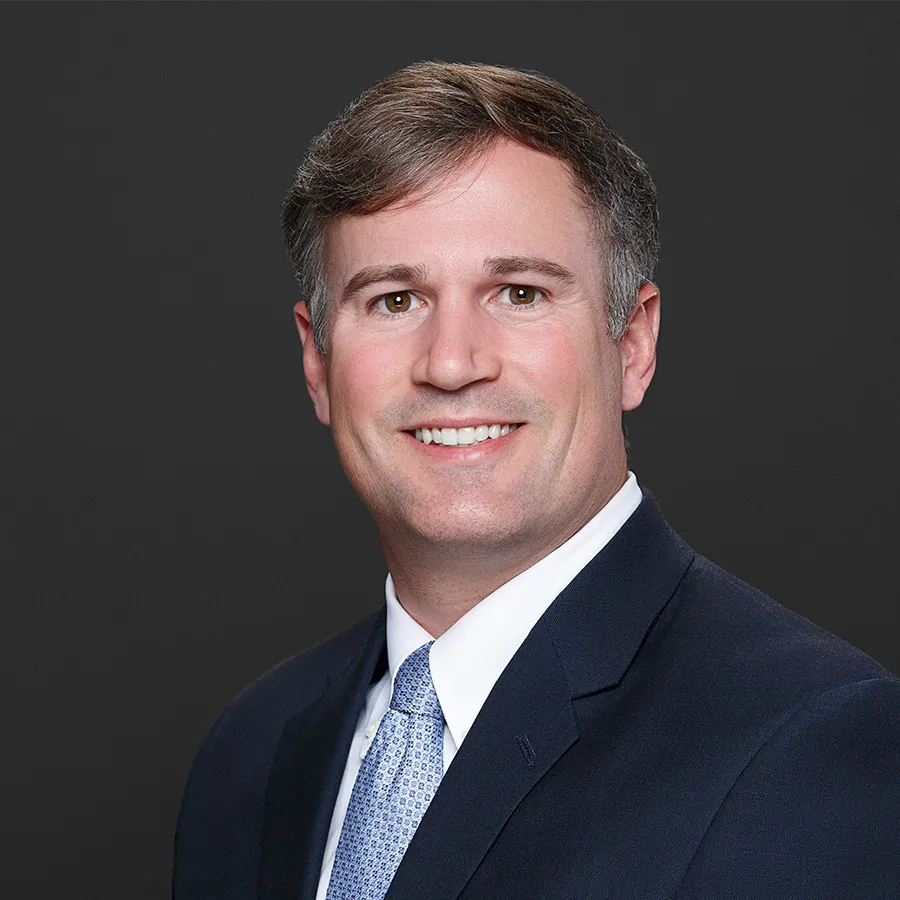

Marcus D. Biggers II, MD
Dr. Marcus D. Biggers II is a board certified orthopaedic surgeon specializing in
knee and shoulder surgery, joint replacement, and sports medicine at
OrthoSouth. He is a Castle Connolly Top Doctor and one of the region's few
surgeons with expertise in robotic-assisted knee replacement - a technique that
uses computer-guided precision to optimize implant positioning and improve
long-term outcomes.
Dr. Biggers completed his sports medicine and arthroscopy
fellowship at the American Sports Medicine Institute (ASMI) in Birmingham,
Alabama under the direct mentorship of Dr. James Andrews - widely recognized as
one of the foremost sports medicine surgeons in the world. During his
fellowship, he served as an associate physician for the Birmingham Barons
(Chicago White Sox AA affiliate), WWE professional wrestling, and Birmingham
Ballet, treating professional and collegiate athletes from across the country.
He completed his five-year orthopaedic surgery residency at the
University of Tennessee Campbell Clinic, earning the Program Director's Award
multiple times. Dr. Biggers earned his medical degree magna cum laude from the
University of Mississippi Medical Center, where he was selected into the Alpha
Omega Alpha honor society and the Gold Humanism Honor Society. He graduated
summa cum laude from Mississippi State University with a degree in microbiology
and was later inducted into the MSU Hall of Fame.
Dr. Biggers treats conditions of the knee and shoulder - including arthritis, torn ligaments, rotator cuff injuries, and joint deterioration that has not responded to non-surgical treatment. He sees patients at OrthoSouth's Arlington and Germantown locations and is a member of the American Academy of Orthopaedic Surgeons, the American Orthopaedic Society for Sports Medicine, and the Arthroscopy Association of North America
FELLOWSHIP
EDUCATION
Medical School: University of Mississippi Medical Center
Residency: University of Tennessee Campbell Clinic
ACCOLADES
Castle Connolly Top Doctor since 2024
CONDITIONS DR. BIGGERS TREATS
Knee
- Knee arthritis and bone-on-bone knee pain
- ACL tears and ligament injuries
- Meniscus tears
- Knee pain that has not improved with injections or physical therapy
- Knee replacement (including robotic-assisted knee replacement)
- Failed knee replacement (revision surgery)
- Patellofemoral syndrome (kneecap pain)
Shoulder
- Rotator cuff tears
- Shoulder instability and recurring dislocations
- Shoulder arthritis
- SLAP tears and labral injuries
- Shoulder replacement (total and reverse shoulder replacement)
- AC joint injuries
- Biceps tendon tears
Sports Injuries
- Sports-related knee and shoulder injuries in athletes of all ages
- Return-to-sport rehabilitation planning
- Overuse injuries in active adults and youth athletes
FREQUENTLY ASKED QUESTIONS
What is
robotic-assisted knee replacement and how is it different from traditional knee
replacement?
Robotic-assisted knee replacement
uses computer-guided technology to help the surgeon plan and execute the
procedure with a higher degree of precision than traditional manual techniques.
The robotic system creates a 3D model of your knee anatomy before surgery,
allowing Dr. Biggers to customize the implant positioning specifically for your
joint. This precision can improve implant alignment and may contribute to
better long-term outcomes and a more natural-feeling knee. Not every patient is
a candidate for robotic-assisted surgery - Dr. Biggers will discuss whether it
is the right approach for your specific anatomy and condition.
Does Dr.
Biggers treat both athletes and non-athletes?
Yes. While Dr. Biggers has
extensive experience treating competitive and professional athletes - including
players from professional baseball, wrestling, and ballet - the majority of his
patients are everyday active adults dealing with sports injuries, joint pain,
or conditions like arthritis. Whether you play recreational sports, work on
your feet, or simply want to stay active without pain, Dr. Biggers treats
patients at all activity levels.
What is
the difference between total knee replacement and partial knee replacement?
Total knee replacement resurfaces
all three compartments of the knee joint. Partial (or unicompartmental) knee
replacement resurfacing only the damaged compartment - typically the inner side
of the knee. Partial replacement has a faster recovery and preserves more of
the natural knee, but is only appropriate when arthritis is limited to one
area. Dr. Biggers will evaluate your X-rays and symptoms to determine which
approach, if either, is appropriate for you.
What is a
rotator cuff tear and do I need surgery to fix it?
The rotator cuff is a group of
four muscles and tendons that stabilize your shoulder and allow you to lift and
rotate your arm. A rotator cuff tear - often caused by injury, repetitive
overhead activity, or normal wear over time - can cause pain, weakness, and
limited range of motion. Not all rotator cuff tears require surgery. Many
patients improve with physical therapy, anti-inflammatory medications, and
activity modification. Dr. Biggers will evaluate the size and location of the
tear along with your symptoms to recommend the appropriate treatment.
How long
is recovery from knee or shoulder surgery?
Recovery time depends on the
specific procedure. Dr. Biggers and the
OrthoSouth care team develop a personalized recovery plan for each patient,
including physical therapy coordination.
Is Dr. Biggers accepting new patients?
Yes, Dr. Biggers is accepting new patients at all of his practice locations.
CERTIFICATIONS