
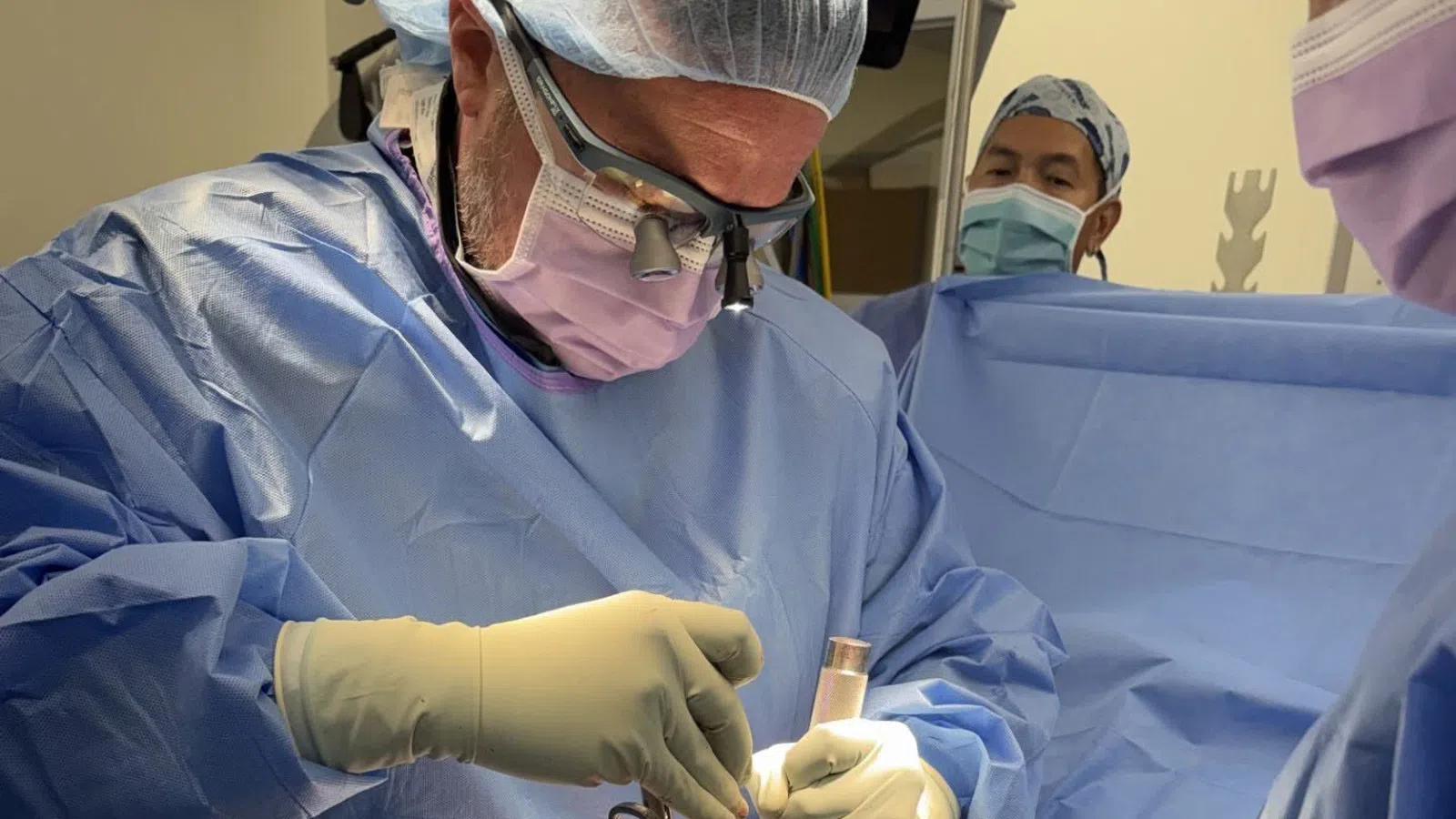
The TOPS™ System
Advanced Motion Preservation for the Lower Back
Relieve lumbar spinal stenosis and degenerative spondylolisthesis without fusing your spine. Retain natural flexion, extension, and rotation.
A Breakthrough Alternative to Lumbar Spinal Fusion
For patients suffering from moderate to severe lumbar spinal stenosis and degenerative spondylolisthesis (a slipped vertebra), surgical decompression has historically required lumbar spinal fusion. While fusion stabilizes the spine by fusing bone, it permanently locks that motion segment, eliminating flexibility in your lower back and transferring mechanical stress to surrounding vertebrae.
OrthoSouth offers the TOPS™ (Total Posterior Spine) System—an FDA-approved mechanical implant that provides stability after decompression while maintaining natural motion in all directions. Instead of welding vertebrae together, TOPS allows your lower back to bend, flex, and rotate naturally.
Mechanical Stability with Natural Biomechanics: Dynamic Facet Replacement
The TOPS System replaces the diseased bony elements and facet joints removed during spinal decompression:
- Complete Nerve Decompression: Your spine surgeon relieves spinal stenosis by removing bone spurs, thickened ligaments, and facet joints impinging on neural pathways.
- Motion-Preserving Stabilization: Instead of inserting rigid fusion cages, rods, and bone grafts, your surgeon anchors the TOPS dynamic device to the pedicles of the target vertebrae (typically L3 through L5).
- Multi-Directional Motion Control: The internal mechanical core acts like a shock-absorbing artificial joint. It recreates normal range of motion—flexion, extension, lateral bending, and axial rotation—while blocking excessive shear forces to keep the vertebrae properly aligned.
TOPS™ Procedure vs. Traditional Lumbar Spinal Fusion
- Maintains Full Range of Motion: Bend forward, straighten, and rotate naturally without the persistent stiffness of a fused lumbar spine.
- Protects Adjacent Spinal Segments: Preserving kinematics at the treated level prevents adjacent discs from absorbing excess torque, lowering the risk of adjacent segment disease and subsequent surgeries.
- Eliminates Bone Graft Complications: Fusion success relies on bone healing (arthrodesis). TOPS provides immediate mechanical stability on day one, eliminating the risk of painful non-unions (pseudoarthrosis).
- Faster Functional Recovery: Patients resume walking, driving, and low-impact recreation weeks earlier without prolonged restriction from rigid lumbar bracing.
Who Is a Candidate for the TOPS™ System?
The TOPS procedure is engineered for adults between 35 and 80 who experience debilitating leg and lower back symptoms from:
- Lumbar Spinal Stenosis: Chronic narrowing of the spinal canal causing leg cramping, pain, or heaviness while standing or walking (neurogenic claudication).
- Degenerative Spondylolisthesis: Grade 1 forward slippage of one lumbar vertebra over another.
- Failure of Non-Surgical Care: Persistent symptoms that have not resolved with physical therapy, medications, or epidural steroid injections.
- Note: Patients with severe multi-level deformity, scoliosis, or advanced osteoporosis will be evaluated for targeted decompression or standard stabilization alternatives.
Frequently Asked Questions About the TOPS™ Procedure
How does the TOPS™ procedure differ from lumbar spinal fusion?
Spinal fusion joins vertebrae together permanently using screws, rods, and bone grafts to eliminate all motion at that level. The TOPS System stabilizes the spine following decompression while allowing the treated vertebrae to bend, flex, and rotate naturally.
Is the TOPS™ System FDA-approved?
Yes. The TOPS System received FDA approval as a safe and effective motion-preserving alternative to lumbar fusion for patients with degenerative spondylolisthesis and lumbar spinal stenosis.
What is the recovery timeline after the TOPS™ procedure?
Because the procedure avoids bone fusion healing requirements, most patients stand and walk hours after surgery. Many transition off prescription pain medication quickly and return to light everyday activities within 2 to 4 weeks.
