

The Science Behind Barometric Pressure & Winter Aches
If you feel an ache in your knees, hips, or lower back right before a cold front moves in, you are not imagining it. For generations, people with joint injuries or arthritis have claimed they could "feel the weather changing in their bones."
The Cleveland Clinic published an article on its website which shows that weather-related joint pain is rooted in real physiological shifts—specifically changes in atmospheric pressure, temperature, and fluid dynamics within the joint capsule.
The Real Culprit: Atmospheric Pressure vs. Temperature
While cold air itself plays a role, barometric (atmospheric) pressure is the primary trigger for weather-related joint discomfort.
Think of the tissues surrounding your joints like an inflated balloon:
- High Barometric Pressure (Clear, Fair Weather): The external atmospheric weight pushes against your body tissues, keeping them slightly compressed.
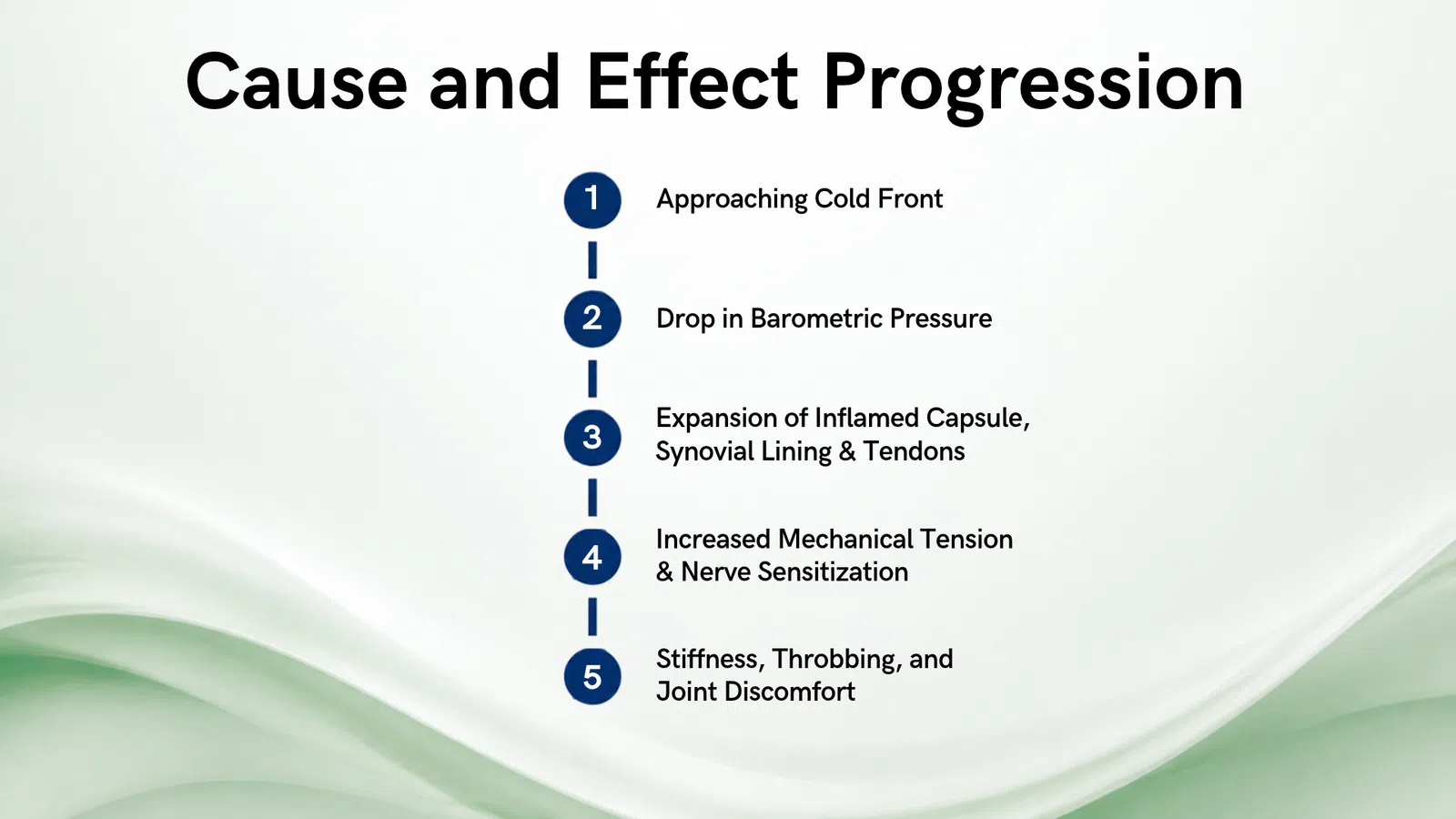
- Low Barometric Pressure (Cold Fronts & Rain): As a storm or cold front approaches, external air pressure drops. This reduction allows inflamed tendons, ligaments, and capsule linings to expand into surrounding nerve pathways, triggering pain signals.
What Cold Temperatures Do Inside the Joint
Beyond atmospheric shifts, cold temperatures create three distinct physiological responses that intensify stiffness (Cleveland Clinic, 2023):
- Less Joint Lubrication
- The joints are lubricated by synovial fluid, which behaves like motor oil. In warmer temperatures, it remains thin, slick, and protective. When core and extremity temperatures drop, synovial fluid thickens, increasing friction across damaged or arthritic cartilage during the first few steps of movement.
- Reduced Movement and Seasonal Inactivity
- Cold, rainy, or overcast days often keep people indoors and sedentary. Prolonged sitting causes muscles and tendons to shorten and lose elasticity, compounding the sensation of early morning joint stiffness.
Cold Weather Joint Symptoms: Normal Aches vs. Clinical Warning Signs
Symptom Experience |
Likely Cause |
Recommended Next Step |
Mild morning stiffness lasting <30 minutes |
Synovial fluid viscosity / early OA |
Dynamic gentle stretching, warm shower, light movement |
Dull, symmetrical aching before a rainstorm |
Barometric expansion of sensitized tissues |
Layered warmth, compression sleeve, hydration |
Sudden joint swelling, warmth, or redness |
Acute synovitis, gout flare, or effusion |
Formal orthopedic evaluation |
Inability to bear weight or knee buckling |
Mechanical ligament or meniscal tear |
Prompt clinical examination / imaging |
4 Evidence-Based Ways to Combat Winter Joint Stiffness from the American Society for Surgeons of the Hand (ASSH.org)
- Pre-Warm the Joints Before Moving: Take a warm shower or apply a heating pad for 10-15 minutes upon waking to thin synovial fluid and encourage microcirculation
- Prioritize Dynamic Over Static Warm-Ups: If walking, running, or working outdoors in cold weather, begin with active dynamic movements (bodyweight squats, leg swings, arm circles) for 5-7 minutes before applying impact load
- Use Graduated Compression: Wearing a breathable knee sleeve or compression tights retains therapeutic body heat and provides gentle tactile support to expanding joint capsules.
- Keep Low-Impact Movement Daily: Use an indoor stationary bicycle, elliptical, or heated swimming pool to circulate synovial fluid across joint surfaces without excessive impact.
M Evelyn Daniel, OTR/L, CHT, Cert DN
Hand Therapy Clinic Director MOTH, MOGH
