

Cervical Artificial Disc Replacement
An Alternative to Cervical Fusion
Relief for Ongoing Neck Pain
Neck pain can make everyday life harder. It may come from problems like degenerative disc disease, a herniated disc, or spinal stenosis. For some people, physical therapy and medicine bring relief. For others, more advanced treatment may be needed.
At OrthoSouth, we provide patient centered orthopedic care with a focus on helping you move better and feel better. For certain patients, cervical artificial disc replacement may be a good option for long-term neck pain relief and improved mobility.
What Is Cervical Artificial Disc Replacement?
The cervical spine is made up of seven bones in the neck, with discs between them that help absorb shock and support movement. When one of these discs wears down or becomes damaged, it can lead to pain, stiffness, and less motion.
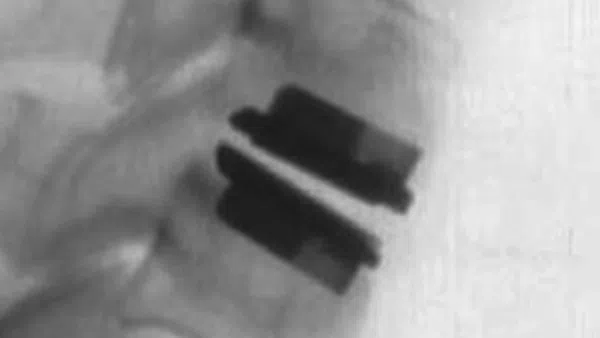
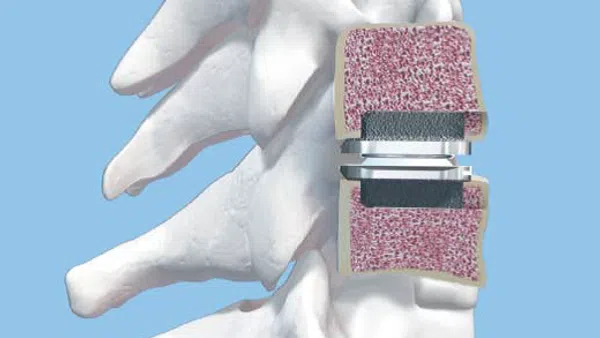
Cervical artificial disc replacement, also called total disc arthroplasty, is a motion-preserving surgery that replaces a damaged disc with an artificial one. The goal is to reduce pain while helping the neck keep its natural movement.
Conditions That May Be Treated
- Degenerative disc disease
- Herniated cervical disc
- Cervical radiculopathy
- Cervical myelopathy
During the procedure, the damaged disc is removed and replaced with a disc device that is designed to act like a healthy disc. This helps provide support and cushioning while allowing movement.
Why Some Patients Choose Disc Replacement Over Fusion
For the right patient, cervical disc replacement may offer benefits compared with spinal fusion.
Motion preservation
Unlike fusion, which limits movement by joining bones together, disc replacement is designed to help preserve motion in the neck.
Shorter recovery time
Many patients are able to return to normal activities sooner than they might after a fusion procedure.
Less post-surgical discomfort
This type of surgery is often less disruptive than traditional open procedures, which may mean less discomfort after surgery.
Lower risk of future stress on nearby levels
Because movement is preserved, disc replacement may help reduce extra stress on the discs above and below the treated level.
Who May Be a Candidate?
Not every patient with neck pain is a candidate for cervical artificial disc replacement. In general, this procedure may be considered for patients who:
- Have confirmed cervical disc disease, such as degenerative disc disease or a herniated disc
- Have nerve pain or weakness caused by pressure on a nerve root
- Have spinal cord compression related to the damaged disc
- Have tried non-surgical treatment without enough relief
- Have one- or two-level disc disease in the cervical spine
- Are in good overall health and do not have certain spine conditions such as instability or deformity
These are general guidelines only. The best way to know if this treatment is right for you is through a full evaluation with our orthopedic team. At OrthoSouth, we take time to understand your symptoms, your medical history, and your goals before recommending a treatment plan.
What to Expect During Treatment
At OrthoSouth, we work to make your care experience clear, supportive, and centered on your needs.
Before surgery
Your care begins with a detailed consultation. Our team will review your symptoms, medical history, and physical exam findings. We may also order imaging tests such as an MRI or CT scan to better understand your condition.
You will also receive instructions to help you prepare for surgery, including guidance on medications and eating before the procedure.
During surgery
You will come to the hospital or surgery center on the day of your procedure. You will receive anesthesia so you remain comfortable during surgery.
- A small incision is made in the front of the neck
- The damaged disc is carefully removed
- The artificial disc is placed in the disc space
- The incision is closed with sutures or staples
After surgery
After the procedure, you will be monitored as you wake up from anesthesia. Some patients go home the same day, while others may stay overnight for observation.
We may prescribe medication to help manage pain and may recommend physical therapy to support your recovery. Follow-up visits with our team help us monitor healing and your progress.
More specific recovery details will be discussed with you in person.
Prodisc C Total Disc Replacement
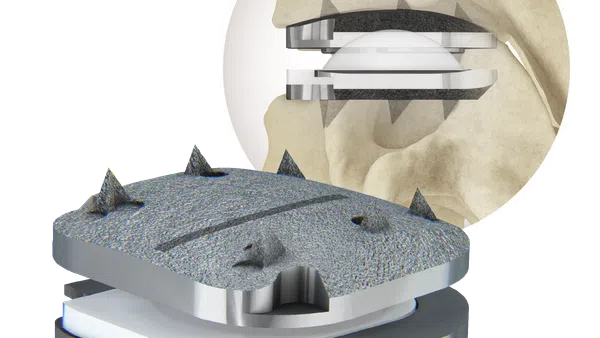
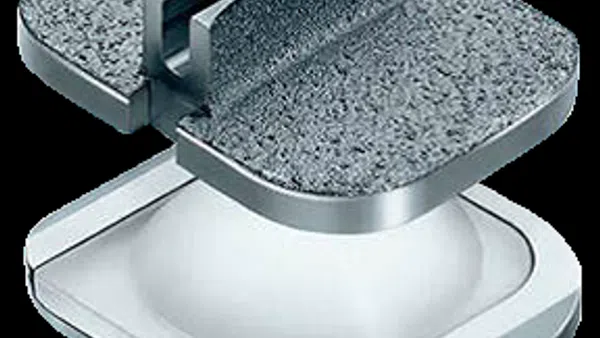
For some patients, the Prodisc C total disc replacement may be used to help restore normal movement and reduce pain. By restoring disc height and replacing the damaged disc, the device can help open space around compressed nerves and support more natural spinal alignment.
Before artificial discs were available, spinal fusion was often the main surgical option. Fusion joins bones together, while Prodisc C is designed to help preserve motion at the treated level and reduce added stress on nearby discs.
Our experienced surgeons and non-surgical care team will guide you through each step of the process with a focus on safety, comfort, and recovery.
